Have you recently experienced a moment of connection through English?
Have you recently experienced a moment of connection through English? For example, a single word exchanged with a stranger while traveling, a laughing conversation with a foreigner in a cafe, or a morning spent reading global news online—in those moments, we might be truly "plugging into English."
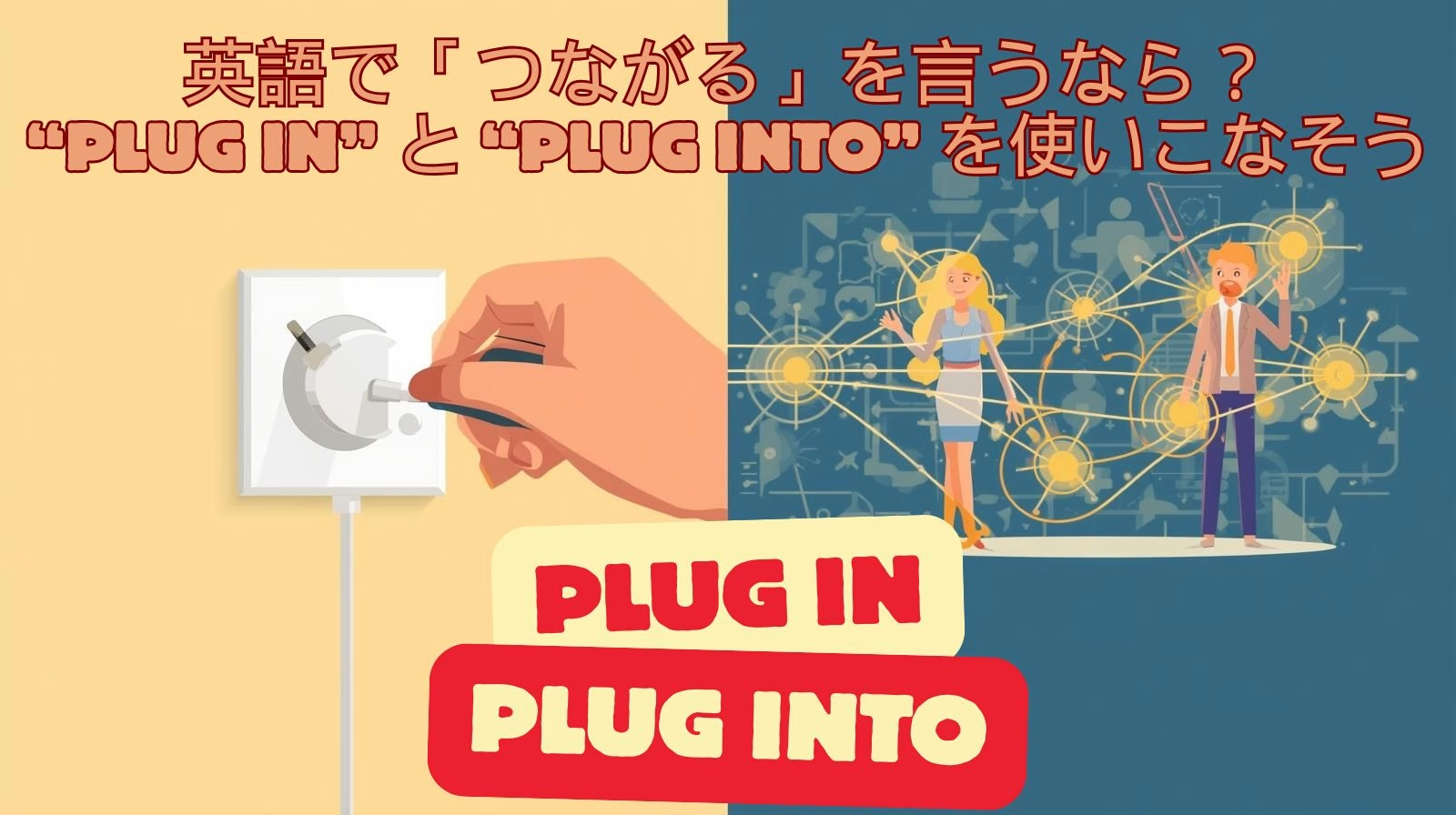
How do you say "to connect" in English? Master the use of "plug in" and "plug into".
"Plug in" and "plug into" are profound phrases that can express more than just a physical "connection"—the connection of culture, information, and people. This article will delve deeply into its meaning and usage.
What you will learn from reading this article:
This explains the difference between using "plug in" and "plug into".
Learn natural example sentences for everyday life, travel, and business.
Understanding the essence of "connection" in English from an etymological perspective.
table of contents
The feeling of "inserting" English
The difference between "plug in" and "plug into"
Etymology and History: "Plug" originated from the word for a stopper (In-depth analysis)
Travel experiences: From "plug in" to "plug into"
"Plug into" in business: Having a proactive attitude towards involvement.
A collection of frequently used chunks
Differences from similar expressions
Let's try making some example sentences!
Summary: English is the power source for "connection".
1. The feeling of "inserting" English
One day, my laptop battery was down to 10% at a cafe. I frantically asked the staff for help.
“Excuse me, can I plug in my laptop here?” (Excuse me, is it okay if I charge my laptop here?)
The moment I plugged in the cable and the power light came on, I felt a sense of relief.
The verb "plug in" has a power that goes beyond simply "inserting." Learning, engaging, understanding—it all begins with "connection."
★ In modern English, "plug in" can also mean "to be involved (with information or society)" or "to stay connected."
2. The difference between "plug in" and "plug into"
These two may look similar, but there are clear differences in how they are used.
● plug in
The basic principle is a physical act of "plugging it into a power source or device." However, it can also be used metaphorically to mean "to stay connected with information or people," as in "stay plugged in."
I need to plug in my phone. (I need to charge my phone.)
Stay plugged in to what's happening around you. (Always be involved in what's happening around you.)
● plug into
More figurative and abstract. It includes the nuance of "becoming part of something" or "joining something."
She quickly plugged into the local culture. (She quickly blended into the local culture.)
We need to plug into new technology. (We need to adopt new technologies.)
The preposition "into" adds the image of "entering inside."
★ Tips for memorizing: "plug in" = the act of connecting itself. "Plug into" = the act of entering the world beyond.
3. Etymology and History: "Plug" originated from the word for a stopper (In-depth analysis)
3-1. Etymological Roots
Etymological nucleusMiddle English pluggeGoing back to (plugs/wooden plugs), and further Middle Low German / Medieval Dutchcomes plugge / plug It is considered to be closely related to [another species].
Basic imageA stopper is something that "blocks a hole" to prevent liquid from leaking. From this, the image of the action of "fitting/inserting" into a hole was derived.
★ Type of etymological change: Metonymy . What was originally a "stopper (noun)" expanded to the **action (verb)** of "to stop/insert".
3-2. The expansion of meaning brought about by the electric age
Late 19th century to early 20th centuryWith the spread of electrical appliances in homes, metal pinsInsert into the outlet (receptacle).The act becomes commonplace. Here, "plug in"電源に接続するIt becomes established by its meaning.
The role of "plug" is changing.: A "plug" to seal a hole → A contact point that "opens up" the flow of electricity.The key point is that the meaning has reversed from "blocking" to "connecting."
★ Historical Note: In the United States, removable attachment plugs became widespread in the early 20th century, dramatically improving the safety and convenience of wiring. Since then, "plug in" has rapidly expanded as an everyday vocabulary term.
3-3. Variation in Usage: Differences in English and American Expressions
American language : plug and(plug),outlet / power outlets(The opening in the wall).
English : plug and The plug itselfsocket(Underbite) is mentioned as a set. → In both cases, "plug in" refers to the act of "inserting into a power source,"Names for an underbiteThis varies by region.
★ Travel Tip: Plug shapes and voltages vary greatly from country to country and region to region (e.g., Type A/B, C, G…). In English, "travel adapter" or "plug adapter" are common terms.
3-4. The process of metaphor: From physics to society
Step 1: Physical connection (power supply) → Step 2: Information Connection (Network Data) → Step 3: Social Connection (Community and Culture)
This extension is a classic example of a conceptual metaphor in cognitive linguistics (CONNECTION IS POWER/ENERGY). Just as a device starts working when plugged into a power source, the metaphorical meaning became generalized from the idea that "plugging into" people, information, or culture activates activity and understanding .
Example:stay plugged into the news(Staying "always connected" to the news = maintaining information awareness) Example:plug into the local community(To "immerse oneself" in the flow of the local community)
3-5. Related words derived from the same root
unplugPhysically, it means "unplugging the power." Figuratively, it means "cutting off the connection" or "digital fasting."
plug-in (noun): softwareExtensionThe concept of physical "plug-in components" has been directly applied to adding functionality.
plug (transitive/colloquial)It also means "to advertise" a product or project (a short advertisement within a program = a plug). The underlying idea is to "create a point of contact and spread awareness."
★ Summary (Key points of this chapter)
The etymology is derived from "plug" → "to insert into a hole" → "to plug into a power source" → and has expanded to "connect" to society and information.
"plug in" isConnection of actions, “plug into” isInvolvement and ParticipationThis nuance tends to become stronger.
The use of metaphor is driven by a shared image of "energy beginning to flow."
4. Travel experiences: From "plug in" to "plug into"
This happened when I was traveling abroad and was looking for a charging spot at the airport. I mustered up the courage to strike up a conversation with a nearby foreign tourist.
Me: “Hey, do you know where I can plug in my phone?” Traveler: “Sure, right behind that coffee stand!” (Hey, do you know of any places where I can charge my phone?) (Of course, it's behind that coffee stand!)
That exchange led to us sharing travel information, and we had a short but engaging conversation. It was at that moment that I truly realized that English is a tool that "plugs into people"—a tool that creates connections with others.
I think that "plugging in" while traveling symbolizes not only access to power, but also the very act of "connecting" to a culture.
★ "Plug into another culture" is a natural expression meaning "to encounter or engage with a different culture."
5. "Plug into" in business: Having an engagement-oriented attitude.
We're trying to plug into a new market. (They are trying to enter a new market.)
You should plug into the project early. (It's better to get involved in the project early.)
Our company is plugged into global trends. (Our company is connected to global trends.)
Here, "plug into" doesn't simply mean "to participate," but rather carries the nuance of "sharing energy" or "immersing oneself in the movement."
In the business world, staying connected is key to success.
6. Collection of frequently used chunks
plug in my phone.
stay plugged in (continue to take in information)
plug into the culture
plug into the system
plug into a conversation
Plug into new ideas (to delve into new ways of thinking)
7. Differences from similar expressions
connect: A general meaning of "to connect." It can be used broadly, both technically and emotionally.
join: To "join" a group or activity.
attach: To "attach" physically.
plug in / intoConnection "generates energy and flow."
★ The phrase "plug into" is characterized by its dynamic nuance of "getting involved and causing change."
8. Let's try making some example sentences!
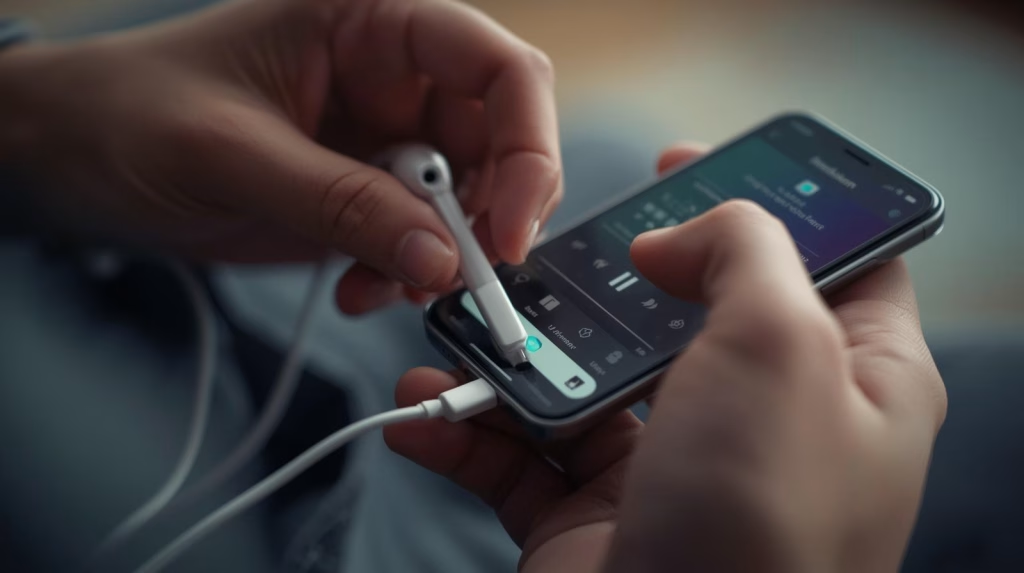
Daily life: I plugged in my earphones and listened to a podcast in English. (I plugged in my earphones and listened to an English podcast.) By the way, what I've been up to lately isBloombergI often listen to podcasts. Do you have any recommendations?
Business: We integrated into the client's workflow and improved the process. (We integrated into the customer's workflow and improved the process.)
Travel: I plugged into local life by joining a cooking class. (By participating in a cooking class, I was able to immerse myself in the local lifestyle.)
Try to remember a moment when you felt connected through English. That will surely be the beginning of your "plug into English" journey.
9. Summary: English is the power source for "connection".
"plug in" = an action that begins with a physical connection.
"plug into" = the act of entering that world.
Its etymology began with "stopper" and then expanded to encompass electricity, information, and culture.
Learning English is about venturing into the world. Every time you encounter a new culture, a new switch is flipped inside you.
Take another step today, “Stay plugged in to learning.” Let's keep the power on and continue our learning.