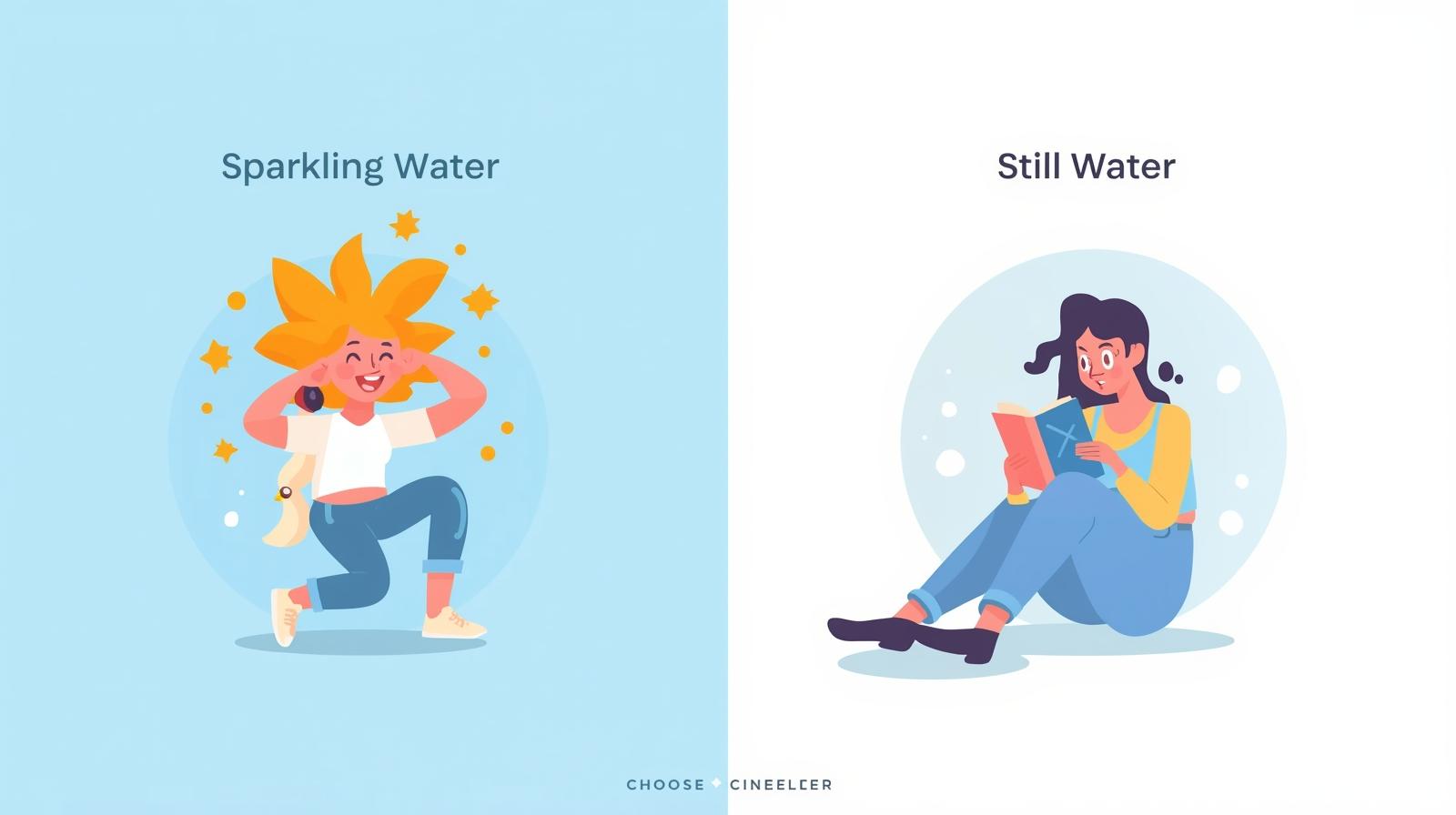
It was around 10 PM on a weekday night. He was wearing a sweat suit, slumped into the sofa, with a smartphone in one hand and potato chips he'd bought at a convenience store in the other.
While social media timelines are filled with photos of a meticulously maintained lifestyle, in this room, empty pizza boxes are scattered on the floor.
This is goblin mode.
A night where I stopped striving for perfection, just being myself.
This article will cover everything from how this term swept the world in 2022, to how it's being used from 2025 onwards, and whether there's a similar expression in Japanese.
*This page contains promotional material.
table of contents
What is goblin mode?
According to Oxford Languages, goblin mode is defined as follows:
" To behave in a blatantly self-indulgent, lazy, slovenly, and greedy manner, in a way that rejects social norms and expectations ."
It's an English slang term referring to a state of defiance or self-indulgence. In Japanese, it would be something like "defiant mode" or "self-indulgent switch."
A good example to illustrate this is the one quoted by CNN from The Guardian.
Example 1
Goblin mode is like when you wake up at 2am and shuffle into the kitchen wearing nothing but a long t-shirt to make a weird snack, like melted cheese on saltines.
(That's goblin mode: waking up at 2 AM, tottering to the kitchen in just a long T-shirt, and making some weird late-night snack like melting cheese on salt crackers.)
In other words, it's a name given to a series of behaviors that involve "spending time in a way that you wouldn't want others to see, dressed in a way that you wouldn't want others to see, and eating meals that you wouldn't want others to see."
But first, what exactly is a goblin?
I kind of understand Goblin Mode. But before that, what exactly is a goblin?
The first thing that came to my mind (or that I remembered) was the small, brown enemy with a pointed hat that roams the Cornelia Plains in Final Fantasy.
That character who earned experience points to level up right at the start of the game.
Because I think of that as a "goblin," I don't really grasp the original meaning of "goblin mode."
However, goblins in reality are not the weak, common monsters found in RPGs.
In reality , it's much older and much more of a family thing.
According to Wikipedia and Britannica, the word's etymology traces back to the 12th-century French word "gobelin ." The earliest documented example is the medieval chronicler Oldericus Vitalis's account of the evil spirit Gobelinus , which allegedly haunted the town of Évreux in Normandy, France . There are also theories suggesting an even earlier connection to the Greek word "kobalos " (mischievous person, scoundrel).
According to Britannica's description, the original image of goblins in English-speaking folklore is as follows:
Goblins supposedly live in grottoes but attach themselves to households, where they are believed to bang upon pots and pans, snatch nightclothes off the bodies of sleeping people, move furniture at night, and flee after rapping on walls and doors.
(Goblins were believed to live in caves, but they were also thought to haunt people's homes, banging on pots and pans, ripping nightclothes off sleeping people, moving furniture in the middle of the night, and then running away after banging on walls and doors.)
In other words, they weren't combat monsters that emerged from caves to hunt prey, but rather troublesome houseguests that caused chaos inside the home . In Japanese terms, they might be best described as mischievous cousins of the Zashiki-warashi (a type of house spirit).
There were two major turning points that led to the transformation of this original image of the goblin into the "weakest monster."
One example is Tolkien's "The Hobbit" (1937) and "The Lord of the Rings" (1954-55) .
His use of "goblin" and "orc" as essentially synonymous, and his portrayal of them as evil armies, established the modern fantasy archetype of "goblins = lower-level enemies to be fought and defeated."
Another one is D&D (Dungeons & Dragons, 1974-).
D&D, the quintessential tabletop RPG, standardized the hierarchy of "goblinoids"—goblin → hobgoblin → bugbear—completely solidifying their position as "the weak enemies you encounter at the beginning of your adventure."
Then, in 1987 , Final Fantasy introduced goblins, following the direct lineage of Tolkien and D&D. According to the Final Fantasy Wiki, the goblins in the first game of the series were the first enemies to appear around Cornelia, and were designed to be defeated in a single blow even by the weakest warrior. The goblins that have become ingrained in the sensibilities of FF fans are thus the final form that has been arrived at over approximately 900 years, counting from the house spirits of the 11th century.
Now, returning to the topic of goblin mode, something interesting becomes apparent.
The "goblin" chosen by Oxford Languages for "goblin mode" is actually closer to an older image of a messy, unhygienic, and selfish prankster that makes a ruckus in homes , rather than the combatants found in Final Fantasy or Dungeons & Dragons . They make strange snacks in the kitchen late at night, scatter things on the floor, and wander around in clothes they wouldn't want to show in public. This is exactly the image that medieval Europeans had of goblins: troublesome creatures that ransack the house.
In other words, "goblin mode," while sounding like a new slang term, is actually a metaphor for comparing modern-day behavior to that of a mischievous person in a house from 900 years ago . Saying "I'm in goblin mode" while thinking of IMP from Final Fantasy feels like a mismatch, but if you picture that mischievous person who moves furniture and rips off your pajamas, it actually fits surprisingly well.
Why was it a hit in 2022?
The term itself isn't new. According to Oxford Languages, its first appearance dates back to Twitter in 2009. However, for more than a decade, it remained a slang term known only to a select few.
The turning point came in February 2022 when a Twitter user created and posted a fake news headline that made it appear as though actress Julia Fox had said "goblin mode" in an interview. Fox had not actually said such a thing, but the image quickly went viral, and searches for the term surged. According to Wikipedia, a similar confession posted on Reddit around the same time, stating that "I act like a goblin when I'm at home," also contributed to the buzz.
Subsequently, goblin mode videos continued to grow, primarily on TikTok, as a reaction against the "perfectly organized daily life." In December 2022, Oxford Languages held its first-ever public vote to select the "Word of the Year," and goblin mode was chosen with an overwhelming 93% of the more than 340,000 votes . This result far surpassed the runner-up, "metaverse."
The head of the Oxford Languages Department stated the following in his explanation of the award:
Goblin mode resonates with all of us who are feeling a little overwhelmed at this point. It's a relief to acknowledge that we're not always the idealized, curated selves that we're encouraged to present on our Instagram and TikTok feeds.
(Goblin Mode resonates with everyone who's feeling a little tired right now. It's a kind of relief to be told that you don't always have to be the idealized, polished version of yourself that you're expected to show on Instagram and TikTok.)
This is the key point. In the third year of the COVID-19 pandemic, at the very moment the world urged people to "return to normal," people responded with "no, we don't want to go back." The name given to that answer was goblin mode.
How is goblin mode currently being used?
From 2025 to 2026, the term's usage will have settled down from its initial popularity as a buzzword and will quietly become established as a lifestyle term.
On TikTok and Instagram, it still frequently appears in the following contexts:
A "day in the life" video showing a messy room, a face just after waking up, and wearing sweatpants.
"My reality" content is posted in contrast to high-end skincare and morning routines.
This approach has also been adopted in brand marketing, with Glossier's #GlossierGlow campaign, which featured unedited selfies, being a well-known example.
In terms of nuance, it has gradually broadened from its initial "defiance against self-indulgence."
season
central nuance
Keyword
First half of 2022
A buzz meme-like source of laughter
Julia Fox, fake headline
Late 2022
A voice for pandemic fatigue
Post-COVID-19 symptoms, reopening fatigue
2023-2024
Anti-perfectionism, body position
Anti-#GirlBoss, unedited
2025-2026
Part of self-care vocabulary
rest, burnout, permission
The argument for the "right to goblin mode" (the right to be sloppy) has become commonplace when discussing burnout and the fatigue of self-optimization.
"Healthy goblins" and "dangerous neglect" are two different things.
An interesting distinction is made in a 2025 English-language article (xorvex.com) that deals with goblin mode.
The idea is to differentiate between " healthy goblin mode " and " unhealthy goblin mode ."
A healthy goblin mode is a few days on the weekend or tired nights when you can laze around without guilt. You can get back on your feet on Monday and, after a while, you'll want to see people again. In short, it's an " intentional rest " to temporarily detach yourself from your social roles.
An unhealthy goblin mode refers to a state where this continues for several weeks to several months. Basic self-care such as brushing teeth and getting dressed disappears, one becomes unable to respond to invitations, and it begins to interfere with living expenses, health, and work. This goes beyond the realm of a buzzword and should be treated as a sign that professional help is needed, such as social withdrawal, depression, or burnout.
In other words, "goblin mode" is a term that refers to whether you are choosing to spend time recovering your body and mind. If you are choosing it, then it's rest; if not, then that's a different story.
Are there any words in Japan that convey the same feeling?
There are several expressions in Japanese that have a similar nuance. However, to be honest, there isn't one that's exactly the same.
The Japanese words "gootara" and "jidaraku" have long existed to describe a state of living a slovenly and undisciplined life. However, these words lack the positive nuance of rebellion, such as "goblin mode," which involves " boldly rejecting societal expectations ." Rather, they more often refer to a state that the person themselves or those around them believe "should be changed."
"Staying at home" became an overwhelmingly popular buzzword in 2020 during the COVID-19 pandemic, and was even chosen as the number one buzzword in the SNS buzzword awards. However, this is a positive suggestion to "enjoy how you spend your time at home," and is not about self-indulgence surrounded by empty pizza boxes.
In the Chinese-speaking world, there is something even closer. "Tanping" (躺平), meaning "lying down tribe ," is a term that became popular among young people in China in 2021, referring to a life of aspirations where one steps away from competitive society and does not seek a house, car, marriage, or children. According to a report by the Nissei Basic Research Institute, it is considered a movement with a strong ideological focus, advocating four "no's" and "low-level consumption." Furthermore, since 2022, a further step has emerged: " Bailan " (摆烂), meaning "no more mending, giving up."
The "three abandonment/ten abandonment" generation in Korea is a similar expression. Starting with "three abandonment," which refers to giving up on love, marriage, and childbirth, the list of things to abandon has expanded to include employment, homeownership, relationships, dreams, health, appearance, and even life itself. This, too, is a phrase in the vein of "if hard work doesn't pay off, then I'll give up."
While "goblin mode" names individual behaviors , the terms "sleeping tribe" and "abandonment generation" are closer to generational lifestyle choices , revealing a clear difference.
In Japanese, the closest thing to the feeling of being in "goblin mode" is probably not a specific word, but rather the declaration you often see on social media: " I've had enough for today, I'm going to sleep, " before sinking into bed.
Learn goblin mode with example sentences
Finally, let's look at some example sentences to see how it's naturally used in English-speaking countries today.
I've been in full goblin mode all weekend. Haven't washed my hair, ordered pizza twice, and rewatched the same show.
(I was in full goblin mode all weekend. I didn't wash my hair, I ordered pizza twice, and I rewatched the same TV show.)
Forget self-care girlies, today is goblin mode girlies.
(Self-care girls take a break today, it's goblin mode girls' day)
I love my friend, but she has been in goblin mode for three weeks now and I'm worried.
(I love my friend, but I'm worried because she's been in goblin mode for three weeks now.)
You can understand the difference by reading it with the distinction between ④ and ⑤ being healthy goblins and ⑥ being on the verge of becoming an unhealthy goblin.
Summary
The idea that it's okay not to be a perfect version of yourself isn't new. Japan has had its share of "laziness" and "staying at home," and humanity has always been lazy on sofas. Yet, the term "goblin mode" captured the hearts of people worldwide in 2022, perhaps because it gave a name to the burden of conforming to a "perfected self" that has become too prevalent on social media.
I have found that if you love life, life will love you back.
(I realized that if you love life, life will love you back.)
ADVERTISEMENT
🇯🇵 Your Japanese language skills can earn you money worldwide.
The number of Japanese language learners is rapidly increasing overseas. No qualifications are required, registration is free, and you can teach at your own pace. Already, learners in over 150 countries worldwide are using italki to learn Japanese.
Apps teach vocabulary. Real teachers teach you to speak. On italki, you can book 1-on-1 lessons with native Japanese tutors from just a few dollars — no subscription needed. Trusted by learners in 150+ countries.
While learning English,
For those who want to speak with English speakers more naturally.
English learning tools like TOEIC are truly effective in improving your English skills. I myself recommend actively using such tools to solidify your foundation.
However, the articles I publish have a slightly different focus.
Not in order to "become able to speak English",Bridging the gap with English speakersI hope this will be of some use to you.
Imagine this: A foreigner who is interested in Japan and studying Japanese starts talking to you using words not found in textbooks, or incorporating dialects—you'd instantly feel a sense of closeness, wouldn't you?
My membership offers an experience that's the exact "opposite" of that . Every week, I compile a list of words that are actually growing in popularity in English-speaking countries, and then analyze the culture and trends behind each word . I deliver a weekly summary of "living English" that you won't find in dictionaries, along with trend information from overseas markets for cross-border e-commerce sites.
Two perspectives delivered every week
Weekly trending words
We compile a weekly list of "currently trending words" on English-speaking platforms like X. We also analyze the culture and trends that gave rise to each word.
Cross-border e-commerce overseas market
Trends in overseas markets on cross-border e-commerce sites. What Japanese items are currently selling well, and the reasons behind it.
Usage plan
Wire Intelligence
980 JPY(TAX+)/month
From the moment you join,All past issuesI can read it.
If you feel this way
I want to incorporate more of the "current atmosphere" into my English posts on social media.
I want to foster a deeper sense of connection when talking with people from other countries.
I want to use firsthand accounts of what's happening on English-language social media to inform my business and communication efforts.
"Modern English" that isn't in textbooks,
This should be a great opportunity to significantly shorten the distance between you and the other person.