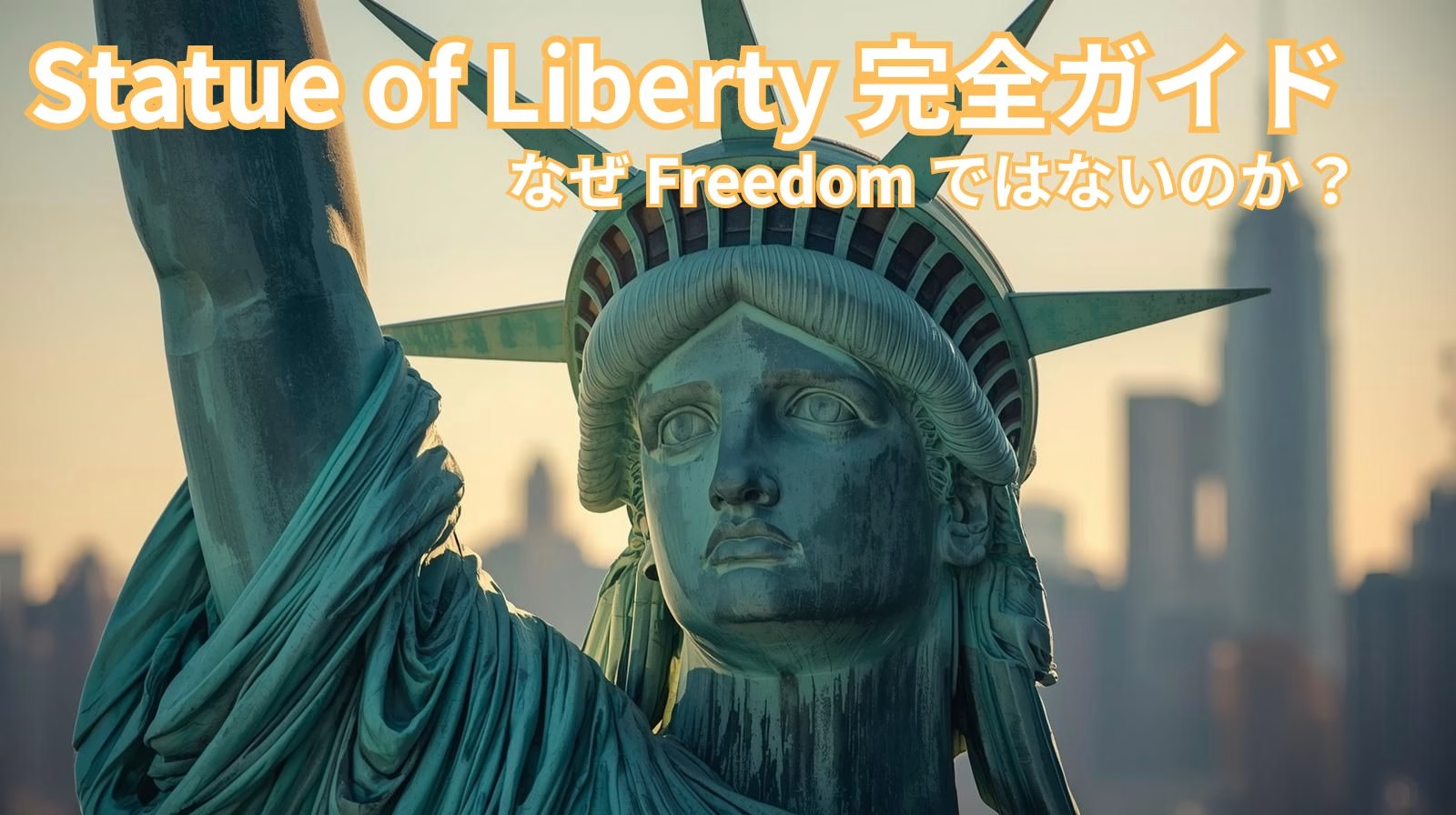
When you're studying English, don't you sometimes stop and wonder, "What does this name mean in English?" For example, the Statue of Liberty is a famous name that everyone knows, but have you ever wondered why it's "liberty" and not " freedom "?
On the other hand, if you are planning a trip to New York,
"What is the meaning of the Statue of Liberty, in the end?"
"If I'm going to go, I'd like to know a little about the background before I see it."
Many people probably think that. But actually, this statue is a structure with a stronger message than it appears.
This article will explore the origins of the name "Statue of Liberty" by examining the nuances of the English word, and will provide a comprehensive explanation of the people involved in its construction, its historical background, and how to get there as a tourist.
For English learners, it reveals the thought process behind word choice, and for travelers, it provides knowledge that changes their perception of things once they know it. Be sure to read it before taking photos.
What you will learn from reading this article The true meaning of the name Statue of Liberty - The difference in nuance between "liberty" and "freedom" The historical background and construction secrets behind the creation of the Statue of Liberty Specific directions and nearest subway station for tourists
*This page contains promotional material.
table of contents
Why is the Statue of Liberty called "Statue of Liberty"?
The English name, Statue of Liberty, is very straightforward. "Statue" means "image," and "liberty" means "freedom." So, a literal translation would be "Statue of Freedom."
However, this "liberty" doesn't simply mean "freedom and carefree." It symbolizes the ideals of American independence: "freedom from oppression" and "freedom as a right."
In English, both "liberty" and "freedom" are translated as "freedom," but their nuances are slightly different.
Liberty refers to "freedom as a right" guaranteed within laws, politics, and social systems. It evokes the image of a state free from external control and oppression, a "freedom that is given and protected."
On the other hand, freedom is a more everyday, emotional kind of freedom. It represents freedom as a personal feeling, such as "being able to do what you like" or "not being bound by anything."
For example, comparing the ways of saying it, it would look like this:
• freedom of choice • freedom to travel
• Civil liberties Liberty and justice for all
In the context of the American Declaration of Independence and the Constitution, the emphasis is on freedom as an ideal that the state must uphold, rather than individual, subjective freedom, hence the choice of "liberty" over "freedom."
In other words, the name Statue of Liberty embodies a strong intention to show the world not "arrogant freedom," but "freedom guaranteed as a right."
Is the official name surprisingly long? The real name in French
The official name of the Statue of Liberty is in French, not English.
Liberty Enlightening the World (Literal translation: Freedom that illuminates the world)
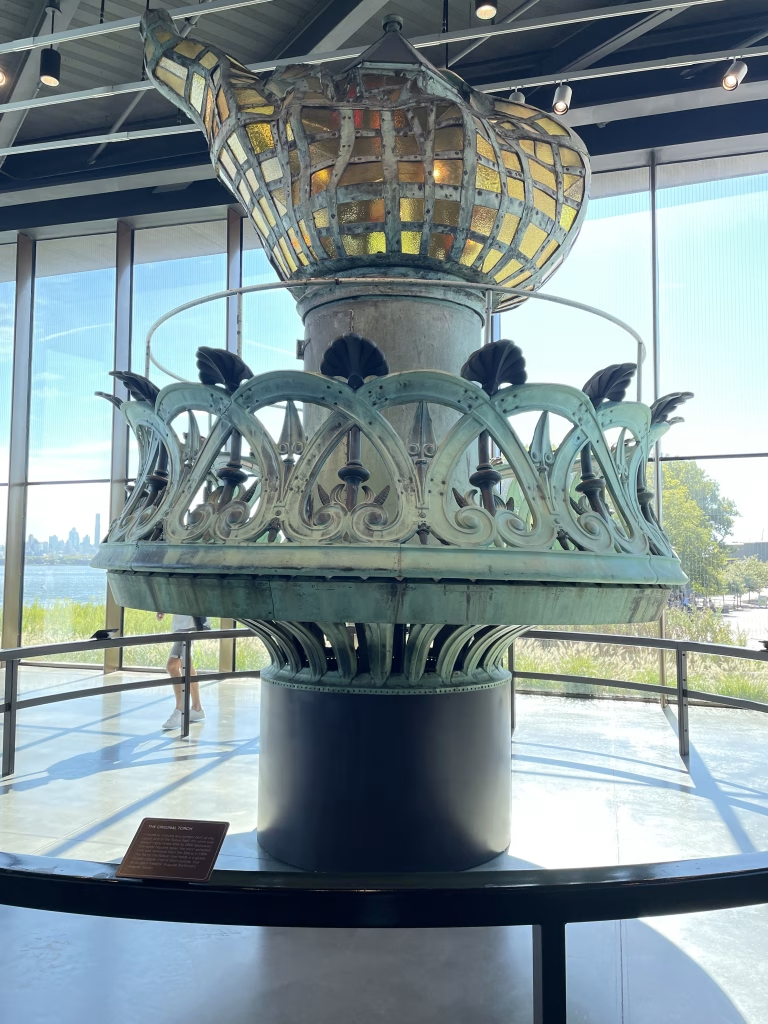
In English, it is translated as "Liberty Enlightening the World." The torch held by the goddess symbolizes "the light of freedom that illuminates the world."
Previously used
This name embodies a strong belief that the value of freedom should spread beyond national borders. It is clear from the name that this is not merely a monument, but an embodiment of the very ideal itself.
This raises a question. Both the English and French names translate directly to "Statue of Liberty," so why is it called "Statue of Liberty" in Japanese?
The reason is that "liberty" is a concept that is personified as a woman in Western culture.
In ancient Rome, there was a goddess of liberty called "Libertas." Bartholdi used this goddess's image as one of his motifs, demonstrating that while liberty is an abstract concept, there was a tradition of representing it in the form of a woman.
On the other hand, in Japanese, simply saying "Statue of Liberty" sounds somewhat impersonal and doesn't convey the meaning easily. Therefore, by adding the word "Goddess," - Being a being with a personality - Being a spiritual and symbolic presence It is believed that this was done to make it easier to communicate intuitively.
In other words, the Japanese name "Statue of Liberty" is not merely a loose translation, but a remarkably accurate translation that was born from an understanding of the statue's philosophy and background.
This name clearly indicates that the statue was created not as a "domestic American symbol," but as a "symbol for the world."
[PR] Have you ever studied textbooks and attended classes, only to find that you can't understand native speakers when it comes down to it?
For those people, we recommend a learning material that allows you to learn "practical English," which has been highly praised by a professor at Kyoto University.
The most distinctive feature of this material is that approximately 150 Americans are speaking "without a script."
Instead of overly polished recorded audio, you can learn the "real speed" and "natural expressions" that you actually hear spoken in cafes and hotels.
It's produced by the team that created bestsellers at KADOKAWA, and the fact that you can easily play it on your smartphone is a major plus.
If you're someone who can't study abroad but wants to develop practical listening skills that will be useful in a foreign country, then you should definitely check this out.
The background behind the creation of the Statue of Liberty | The special relationship between France and America
The Statue of Liberty was not built solely by the United States. It all began in the 19th century when French intellectuals planned to present America with a "symbol of liberty and democracy."
This is rooted in France's historical support for the American Revolutionary War. American independence also had an ideological influence on the French Revolution. The Statue of Liberty is also a diplomatic symbol that embodies the shared ideal of freedom between the two countries.
The impetus for its construction was the "100th anniversary of American independence."
The statue was planned to commemorate the 100th anniversary of American independence.
The initial target completion date was 1876. However, due to a lack of funds and technical challenges, it was delayed and finally completed in 1886. The fact that it wasn't completed in time for the anniversary year is another human touch that's fitting for the Statue of Liberty.
Who created it? The people involved in the creation of the Statue of Liberty
The statue was designed by the French sculptor Frédéric-Auguste Bartholdi. I brought to life the bold concept of a gigantic female figure.
The internal structure was designed by Gustave Eiffel, who would later build the Eiffel Tower. The most distinctive feature of this statue is the fusion of its artistic exterior and its engineering rationality.
Was the concept behind the statue the same as that of the Eiffel Tower?
What is the Statue of Liberty made of? Architectural ingenuity seen through materials.
First, let's break down the materials used in the Statue of Liberty; its structure can be broadly divided into three parts.
Exterior: Copper • Internal structure: Iron (now partially replaced with stainless steel) • Base: Concrete and granite
The outside of the goddess is covered with copper plates about 2.4 millimeters (3/32 inch) thick . This is about the thickness of two stacked American 10-cent coins. Although it feels extremely thin, these copper plates were made using a technique called "repoussé," where they are shaped by hammering. This thinness allowed the overall weight of the statue to be kept down while still being supported by the flexible internal framework designed by Eiffel.
Copper is an easy-to-process and highly durable metal. Over time, its surface oxidizes, turning into its current green color (verdigris), but this verdigris actually plays a role in protecting the interior.
The internal framework was initially made of iron . Eiffel, who was in charge of the design, devised a way to prevent corrosion by not directly fixing the copper exterior to the iron interior, but by sandwiching an insulating material between them.
However, during the large-scale restoration in the latter half of the 20th century (1980s), many of the deteriorated iron components were replaced with stainless steel . This was a decision made to maintain the original structural philosophy while incorporating modern materials technology.
The base is made of concrete and granite . It is heavier than it looks and plays a role in supporting the entire statue from strong winds and vibrations.
Looking at it this way, it becomes clear that the Statue of Liberty was a highly rational structure that made the most of the materials available in the 19th century—copper, iron, and stone—while achieving a structure that could withstand more than 100 years.
The interior of the Statue of Liberty has a steel frame structure. The outer copper plates are not directly fixed to the internal structure, allowing them to withstand wind and temperature changes.
This concept is almost identical to that of the Eiffel Tower. It also marked a turning point in modern architecture, where massive structures were built to be "light and flexible."
So, how does this construction method compare to current building technology?
In late 19th-century architecture, design relied heavily on the experience and trial and error of craftsmen. The Statue of Liberty, for example, did not utilize modern computer analysis; its resistance to loads and wind pressure was carefully verified through model experiments and theoretical calculations.
On the other hand, in modern high-rise buildings, structural analysis software and simulation technologies are used to precisely predict earthquakes, strong winds, temperature changes, and other factors in advance. High-performance steel and composite materials are also used, resulting in buildings that are lighter and stronger.
Nevertheless, the fundamental philosophy behind the Statue of Liberty remains unchanged. The idea of not completely fixing the exterior, but leaving a slight degree of "flexibility," to protect the structure over a long period of time, is an important principle in modern architecture as well.
In other words, although the Statue of Liberty did not utilize the latest technology, its structural philosophy itself is still relevant to modern architecture, making it a very advanced building.
Why New York Harbor? Why was Liberty Island chosen?
New York Harbor was the largest gateway to America at the time. This is the first place immigrants arriving by ship from Europe would see.
By placing the Statue of Liberty at the entrance, they conveyed a silent message: "Welcome to the land of the free." The location itself completes the meaning of the statue.
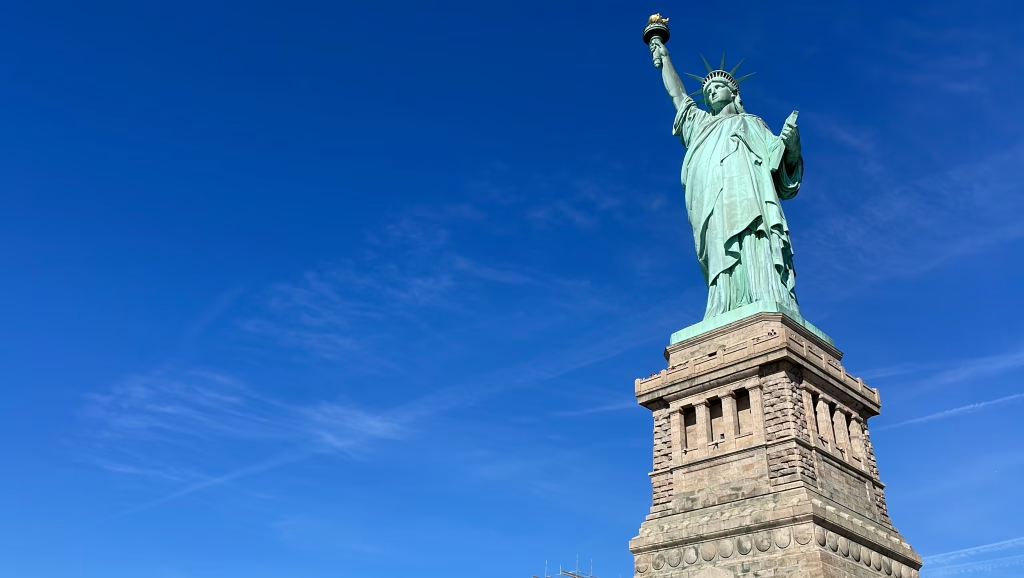
The torch, book, and chains at the goddess's feet symbolize the following:
Torch: Light of Freedom, Enlightenment Books: Law and Knowledge (inscribed with the date of the Declaration of Independence) Chains at your feet: liberation from tyranny and oppression
None of these are coincidences; their symbolism has been meticulously calculated. The chain at the base of the statue is often overlooked, but it most succinctly represents the theme of the statue.
Why the Statue of Liberty Became a "Symbol of Immigration"
In the late 19th and early 20th centuries, many immigrants entered America via Ellis Island.
The first giant statue they ever saw was the Statue of Liberty. Hope, anxiety, a fresh start. I've become someone who embraces all of it. The meaning of "America as a nation of immigrants" was added naturally over time.
In fact, there were numerous problems before its completion? A history of funding difficulties and citizen participation.
The construction of the Statue of Liberty was not smooth sailing from the start. Rather, for a long time, it was a case of "grand ideals, but a lack of funds in reality."
The initial plan was for France to bear the cost of the statue itself and the United States to bear the cost of the pedestal. However, raising funds for production was not easy for France either, so Bartholdi repeatedly held fundraising events and exhibitions, gradually accumulating the necessary funds.
Meanwhile, the situation was even more serious for the United States. Funding for the construction of the pedestal proved difficult to raise, and the project was temporarily suspended. Many people questioned whether it would ever be completed.
The person who significantly changed this situation was newspaper magnate Joseph Pulitzer. He launched a fundraising campaign in his newspaper, the New York World, declaring that "even donations of less than one dollar will have the names of all donors published in the newspaper."
As a result, not only wealthy supporters, but also immigrants, laborers, and even children began to contribute small amounts of money. Ultimately, the funds needed to construct the pedestal were raised through the efforts of the citizens.
This episode demonstrates that the Statue of Liberty was not merely a gift from France, but a monument completed through the participation of American citizens themselves.
In other words, the Statue of Liberty is not only a "statue symbolizing freedom," but also a "freedom project supported by the hands of the citizens."
If you're going sightseeing, this is the place to go | How to get to the Statue of Liberty
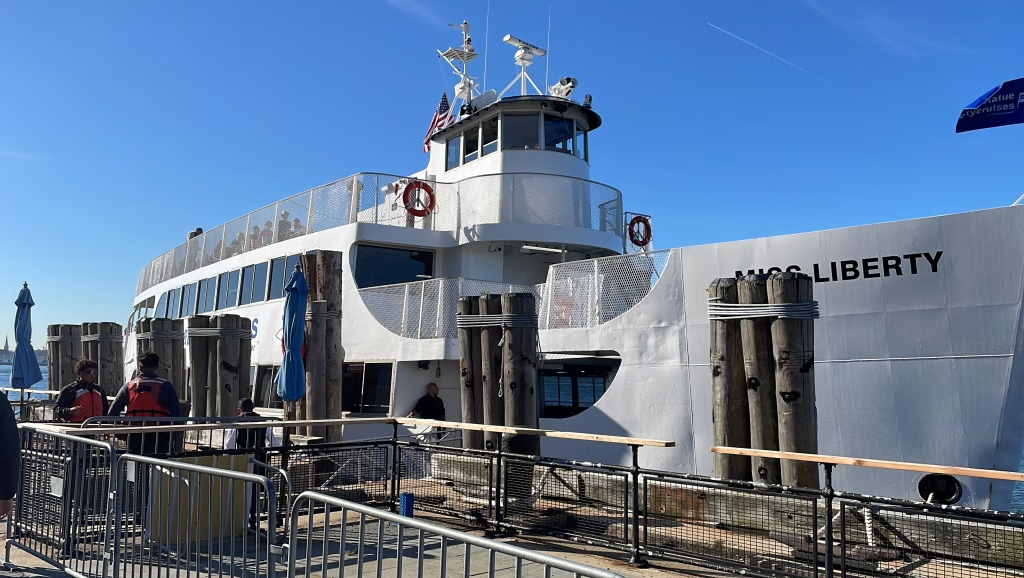
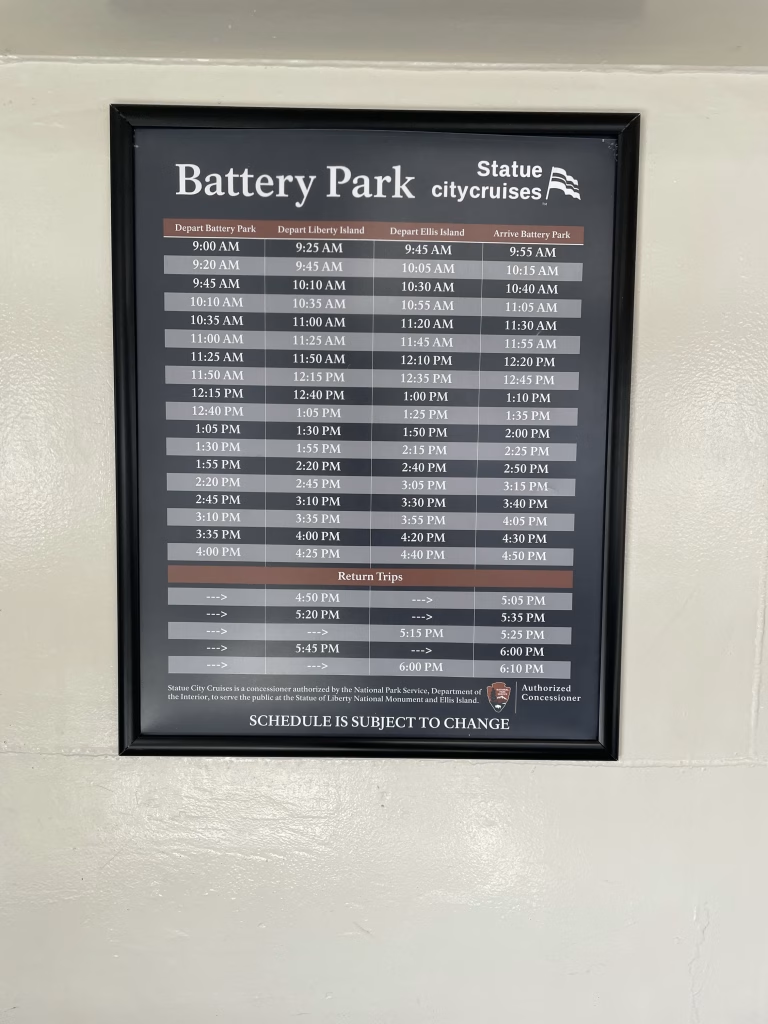
The only way to get to the Statue of Liberty is by ferry. There are two departure points.
Manhattan side: Battery Park New Jersey side: Liberty State Park
You can get to Liberty Island from either location, but ferry reservations are absolutely required in advance. Please note that this is different from the tourist boats you can just hop on at the island.
Currently, Statue City Cruises is the only officially authorized operator for booking and selling tickets .
Tickets can be broadly categorized into the following types:
• General Admission (landing on the island only) • Pedestal Reserve (Entry permitted up to the pedestal area) • Crown Reserve (Allows entry to the interior of the crown; limited number of people allowed)
Crown Reserve tickets, in particular, often sell out several months in advance, so it's recommended to book early once your travel dates are set.
While there are inexpensive cruises in the area that only offer a view of the Statue of Liberty from the sea, this official ferry is the only way to actually land on the island.
If it's your first visit, General Admission is more than enough to satisfy you, and if you have the time and energy, you might want to consider getting a pedestal or higher.
Nearest subway station and access methods (easy to navigate even for first-timers)
Battery Park (on the Manhattan side) , where ferries to the Statue of Liberty depart , is easily accessible by subway.
The main nearest stations to Battery Park are as follows:
• South Ferry (Platform 1) Bowling Green (Platforms 4 and 5) Whitehall St (R and W lines)
From any of the stations, you can reach Battery Park in just a few minutes' walk after exiting to the ground level. There are plenty of signs, so it's easy to navigate even if it's your first time.
The following map is useful for checking the actual locations.
*By selecting "Subway Map" from this page, you can access the latest map (PDF version or live map).
If you search for "Statue City Cruises Battery Park" on Google Maps, you can also find walking directions to the ferry terminal.
Please note that there will be a baggage check similar to airport security before boarding the ferry.
Large backpacks and suitcases are not allowed , and there are no coin lockers on Liberty Island.
It's best to travel light. Arriving 30 to 45 minutes before your reservation time is recommended.
Sightseeing tips you should know before you actually go
A separate ticket is required to enter the interior of the crown.
Allow about half a day for the process.
It's less crowded in the morning.
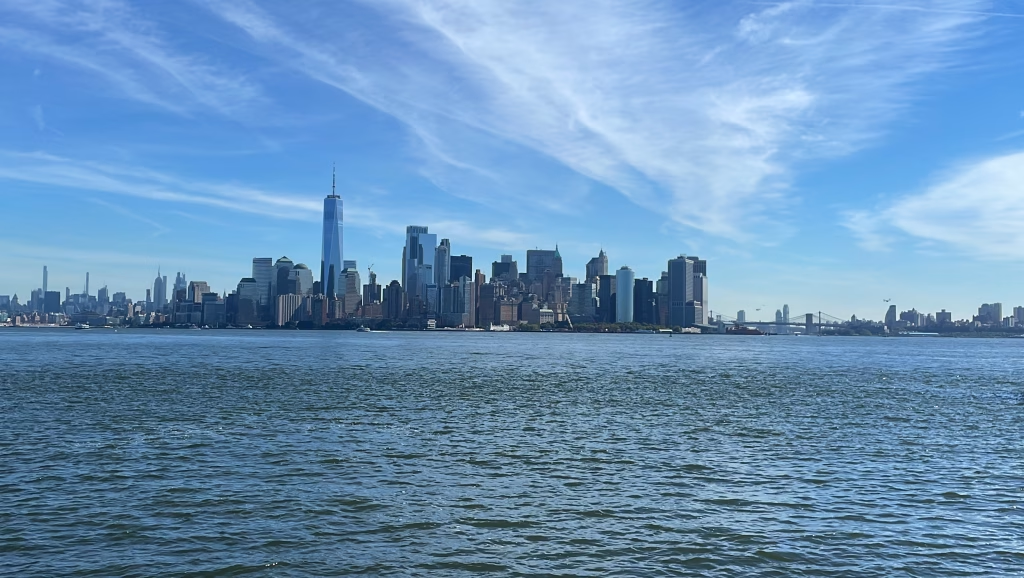
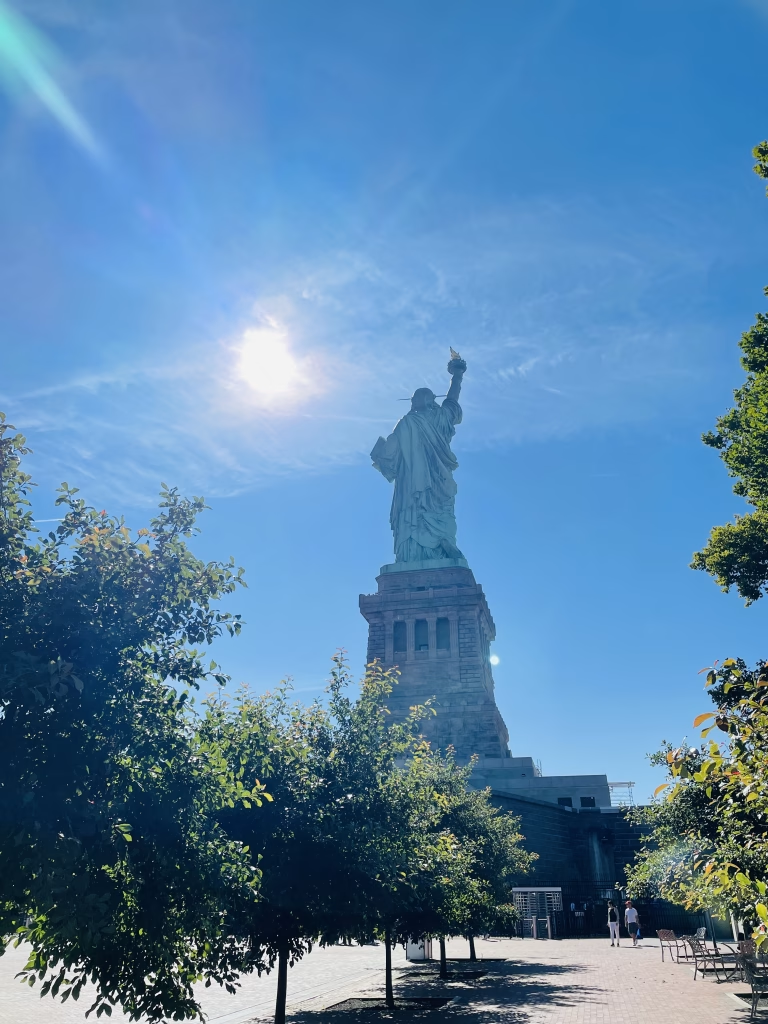
Taking photos on the ferry is also a great idea. The Statue of Liberty gives a very different impression depending on whether you view it up close or from a distance.
View from behind
Is it actually free to watch? The Staten Island Ferry is a hidden gem.
For those who want to keep their budget as low as possible or who don't have time to land on the island, the Staten Island Ferry is a great option.
This ferry is a public transportation service connecting Manhattan and Staten Island, and it is completely free and available 24 hours a day . Although it is not a tourist ferry, it passes very close to the Statue of Liberty along its route, so you can get a good view of it from the sea.
Please note that this ferry does not allow you to land on Liberty Island or Ellis Island . You can only "see" them from there, but it's perfectly fine for taking photos and soaking up the atmosphere.
If you have time or budget constraints, combining it with a regular ferry might be a good option.
Summary
The Statue of Liberty is a statue that symbolizes the "ideal of freedom." The official name is "Freedom that Illuminates the World." It was built as a symbol of friendship between France and America. - It has an internal structure based on the same concept as the Eiffel Tower. - Became a symbol of hope for immigrants When sightseeing, it's important to check the ferry and nearest subway stations in advance.
Liberty is not just a monument to behold; it is a value we embrace as we continue to learn and move forward.