Treatonomics is a portmanteau of "treat yourself" and "economics," referring to a consumer behavior and trend in which people actively spend money on small luxuries and experiences in an era of increasing economic anxiety.
A balanced spending style, where daily shopping is kept simple while spending tens of thousands of yen on a favorite artist's live performance on the weekend, is a perfect example of Treatonomics.
The Cambridge Dictionary blog also featured this term in February 2026, and it is already becoming established in the fields of marketing and consumer behavior.
On TikTok, it's also called " Little Treat Culture ," and it's used as a synonym among Generation Z.
*This page contains promotional material.
The difference from the "lipstick effect"
To better understand Treatonomics, it's helpful to know its predecessor, the "Lipstick Effect," so I'll explain it here.
The lipstick effect refers to the phenomenon where sales of affordable luxury goods such as lipstick increase during periods of economic downturn.
This phenomenon, observed during the Great Depression of 1929 and after the 9/11 attacks in 2001, reflects a positive human psychology: "Even if I don't make a big purchase right now, I want to lift my spirits with a small luxury."
Treatonomics is a modern update of this concept . Its scope extends beyond lipstick to include skincare, candles, Labubu collector dolls, and even Taylor Swift concert tickets. The key difference is that it includes not only "things" but also "experiences."
Lipstick effect
Treatonomics
historical context
Great Depression ~ 2000s
2020s to present
Target
Affordable small items (such as lipstick)
Goods + Experiences (Concerts, Travel, etc.)
psychological background
Comfort in frugality
Emphasis on self-care and mental health
generation
All generations
Especially Millennials and Gen Z
Why is Treatonomics gaining popularity now?
There are three main social factors behind this.
① Diversification of values and an awareness of "cherishing the present moment" ... More young people are choosing to cherish "small happiness in this very moment" rather than being bound by traditional "major life milestones" such as buying a house or getting married. A lifestyle that finds joy in everyday life, alongside long-term goals, is becoming widespread.
② Increased awareness of mental health ...Generation Z, in particular, has a high level of interest in self-care, and the idea that "consumption equals self-care" has become firmly established. Buying a candle with a favorite scent or going to a spa are seen as legitimate ways of "managing one's mental health."
③ Changes in values due to the COVID-19 pandemic ... After the pandemic, there was a rapid increase in the desire to "spend money on experiences." People are happy to spend 10,000 to 20,000 yen, or even tens of thousands of yen including travel expenses, on tickets to dome concerts or festivals of their favorite artists. This kind of consumer behavior is symbolic of this trend. I've lived my whole life without ever doing anything like that, so now I think I would have liked to go see a concert of my favorite artist.
Specific examples of Treatonomics
The defining characteristic of Treatonomics is balancing everyday saving with "reward spending." The following is a typical behavioral pattern.
I keep my daily grocery choices simple, and on weekends I enjoy a nice latte at my favorite cafe.
I usually wear affordable clothes, but I don't hesitate to spend money on concerts of my favorite artists.
On my way home from work, I stop by a convenience store and choose a slightly luxurious sweet as a "reward for myself today."
Get collectible toys like Labubu and adult-oriented LEGO kits whenever you like.
Celebrate small milestones like promotions or achieving goals by buying things you like.
Usage and Examples
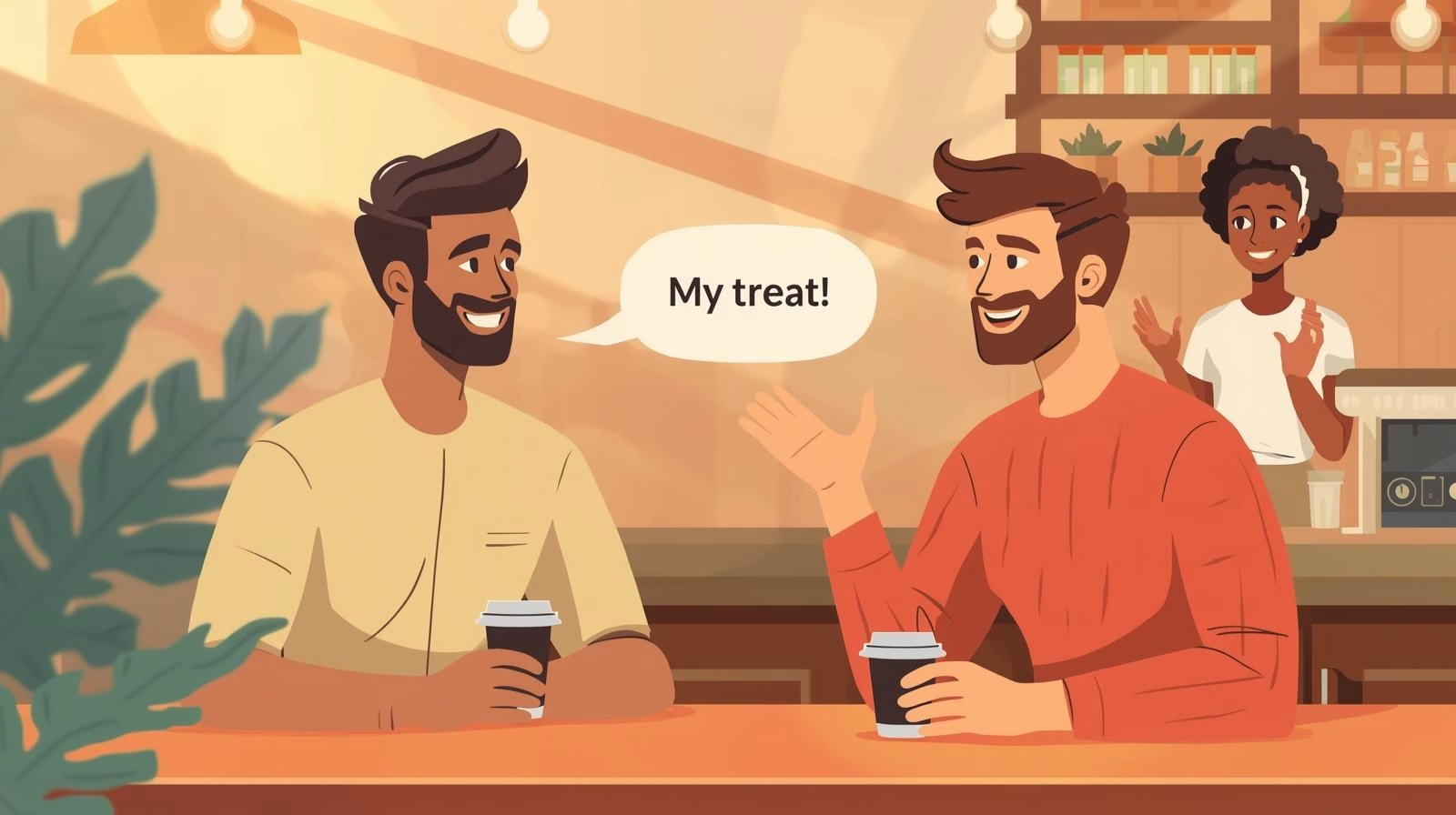
Treatonomics is a term primarily used in the context of news, marketing, and consumer behavior. For casual everyday conversation, related expressions like "little treat" or "treat yourself" are better choices.
English example sentences
Example 1 (in a news/report context)
“Treatonomics is booming, with consumers cutting back on basics but splurging on concerts and collectibles.”
The so-called "Treatonomics" trend is thriving, where consumers save money on everyday necessities while spending large sums on concerts and collector's items.
Example 2 (Conversation/SNS context)
“I skipped my usual lunch out all week, but I treated myself to a $60 candle on Friday. That's treatonomics for you.”
I kept my lunches simple for a week, so on Friday I treated myself to a $60 candle. That's what you call Treatonomics.
Example 3 (in a marketing context)
“Brands that tap into treatonomics—offering small but emotionally meaningful products—are outperforming competitors.”
Brands that leverage Treatonomics to offer emotionally valuable small products are outperforming their competitors.
Example 4 (Conversation as part of Little Treat Culture)
“It's little treat culture. I had a rough Monday, so I stopped by the bakery and got myself a croissant.”
This is Little Treat Culture. It was a pretty tough Monday, so I bought myself a croissant on the way home.
Similarities with Japanese trends
"Treatonomics" is a concept that is easily familiar to Japanese people. In Japanese, it overlaps deeply with terms like "small luxuries," "rewarding oneself through consumption," and "fandom activities ." Fandom activities, in particular, align with the spirit of Treatonomics in that they view consumption related to one's favorite artists or characters as "an investment in one's own emotions."
Trying limited-edition sweets released at convenience stores, buying slightly expensive cosmetics as a reward for hard work, and actively spending money on concerts and stage performances by your favorite artists—all of these can be considered the Japanese equivalent of Treatonomics. This term has rapidly gained use in consumer behavior analysis in Europe and the US since 2025, and can also be applied to describe the behavior of Japan's Gen Z and Millennials.
For me, Treatonomics means 551 Horai's pork buns. While I usually eat more vegetables, there are times when I crave meat. And at those moments, the moment that distinctive aroma wafts through the air, all rationality is rendered powerless. I'm standing in line at the register.
That feeling of pure bliss when you take a bite... This is it! I think to myself as I stuff my face with the pork bun.
It wasn't about saving money or being extravagant. I was simply following my instincts.
Keep your daily life simple, but don't hesitate to spend money on experiences and things that are truly worthwhile. That's Treatonomics.
The key point of this phrase is that it 's not simply "impulse buying" or "wasteful spending," but rather intentional consumption for one's own well-being . It could be described as a modern philosophy of living that incorporates "small, guilt-free joys" into everyday life.
“Caring for myself is not self-indulgence, it is self-preservation.” — Audre Lorde (poet, writer, and philosopher)
advertisement
English Trend Wire
On X in English-speaking countries"Words that are actually gaining popularity right now",
We compile and deliver the data weekly.
This weekly membership compiles trending words on English-speaking platforms and analyzes the culture and context in which each word originated . We deliver a weekly summary of "living English" that you won't find in dictionaries, along with trend information from overseas markets for cross-border e-commerce sites.
Wire Intelligence
980 JPY(TAX+)/month
Weekly trend word analysis + trends in the cross-border e-commerce overseas market
What are the words that are currently gaining popularity in English-speaking countries?Weekly tally, explaining the culture and trends as well.
Cross-border e-commerce siteOverseas marketWe deliver the latest trends every week.
From the moment you join,All past issuesYou can read it.
If you have a note account, you can start reading immediately. You can cancel anytime.
ADVERTISEMENT
🇯🇵 Your Japanese language skills can earn you money worldwide.
The number of Japanese language learners is rapidly increasing overseas. No qualifications are required, registration is free, and you can teach at your own pace. Already, learners in over 150 countries worldwide are using italki to learn Japanese.
Apps teach vocabulary. Real teachers teach you to speak. On italki, you can book 1-on-1 lessons with native Japanese tutors from just a few dollars — no subscription needed. Trusted by learners in 150+ countries.